Biz-Go Seminar with the 'propellor heads' (Techs) this afternoon. A seminar - well sales pitch really from many big business names in IT industry - some new contacts made, some old contacts renewed - drinks & nibbles good too :-)
It is interesting to note the common themes emerging from the tech world similar to our own - i guess they are following the trends to meet our tech. needs...
Covergence (integrated systems), Wireless, communication portals, content managment (analog to digital) & security.
I had a deja vu experience listening to Tandburg (backup systems) talk about the exponential growth in data (we know it as the information explosion) - our angle is how we navigate this for learning (Infoglitz, Infoglut, Infogarbage) - their angle is how to protect the data
Test your backup systems!!!!!!!!! Delete a file (make sure its not important) - go back a week later and use your backup system to restore it - do it now - just to make sure that you can...
Communication portals - intranet/extranet software solutions - phew so expensive - haven't they heard of Moodle
No open-source in sight of course (it's their business to sell this stuff) & funny that none of them had heard of the Pringle can wireless enhancer!!
I thought this HP Digital Pen was really cool - convert handwritten & printed hard copy to digital form - i know this is a big issue for our secondary schools (TaraNet Cluster) particularly who are trying to get their teachers work (traditionally pen & paper) into digital form for sharing.
Though a lot of the presentations went over my head - i did manage to get the gist of most it. Thanks to Gen-i (formerly Computerland) keeping me in the loop :-)

Professional reflections on education in NZ - Dancing on the shifting carpet
Thursday, 27 October 2005


How Many Smart Boards?????
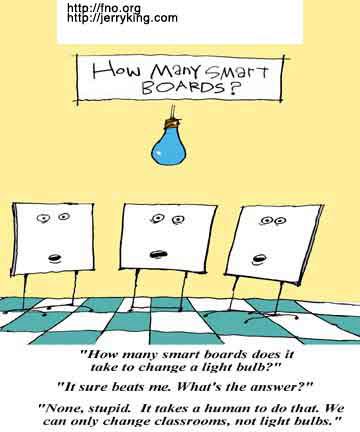 © FNO Press, 2005
 Copyright Policy: While the copyright for this cartoon by Jerry King belongs to From Now On, readers may distribute and republish provided they reproduce the credit with a link to Jerry's Web site http://www.jerryking.com/ and to From Now On http://fno.org.
Really??!! ;-)
Spent the day with lead teachers working out some ideas to help move teachers forward in integrating ICTs in their classroom practice ...
Working on Gladwell's 'Law of the Few' - "With the adaptions of innovations into a system you have the Early Adaptors to move this along to the Early Majority it is not an easy transition - here the Law of the Few is important as they help 'translate' for the rest of us - concentrate your resources on a few key areas." So our lead teachers are our key resource people - some been with us for awhile, some just joining us for the first time - all enthusiastic, energetic & hopeful (Fullan 2001) - ready to help drive change in their own classrooms & in their schools - wahoo!! Jamie McKenzie gives some good advice for lead teachers in his articles:
Traits of an Effective Technology Coach
& How Teachers Learn Technology Best
Good reading for anyone working with teachers. Really looking forward to Jamie coming to work with us in 2006 - if you're not in our cluster and you want to join us Saturday June 10th 2006 - drop me a line :-)
Wednesday, 26 October 2005
“I think the big mistake in schools is trying to teach children anything, and by using fear as the basic motivation.Fear of getting failing grades, fear of not staying with your class etc.Interest can produce learning in a scale compared to fear as a nuclear reaction to a fire cracker!
Visit Bruce's Blog!!! Thx Richard
Looking forward to Bruce joining us in a few weeks to challenge our thinking more & to move us from just thinking about things to taking action & making real change...
Friday, 21 October 2005
Treat your Password Like Your Toothbrush...
Change it regularly & don’t share it!!
So don’t use silly password such as Fred! (or such like ;-)

Phew some pretty powerful computer forensic software demonstrated to us today – you can delete, you can move things around, but you can’t hide anything! Yes Henry you will need to ‘wipe’ your hard drive – formatting does not remove data from your machine – a screwdriver through the hard drive will but I think the MOE want those teacher laptops returned to Wellington.
Really interesting activities involving searching for hidden messages and pictures & then working out a response based on the NetSafety guidelines. Find the NetSafety Kit here
Trying to work out if something is inappropriate, objectionable or illegal, saw us searching for pictures of cats, chickens & cows!! As Yvonne so aptly put it Hornography & if it was a picture of a calf – even worse child hornography!!
Thanks to
Wednesday, 19 October 2005
EPS
Welcome Liz to Bard Wired! Liz Malone has just taken over as Principal @ EPS. I spent some time bringing her up to speed on our cluster’s learning journey together so far. Phew – hope I didn’t confuse Liz too much!! But she is all logged on to Interact now – and able to check out our milestones there and try and get her head around it in her own good time. I also made sure to tell her what a great teaching team she has joined but hey she had already figured that one out.
Had a short time at staff meeting to introduce the DLOs (Digital Learning Objects) to the EPS staff - which turned into a bit of a fizzer as Firefox doesn't play a lot of them - i think something to do with the ActiveX on the pages (Firefox doesn't support ActiveX- which is one reason it is a more secure browser than Internet Explorer). I hate wasting teachers' time at staff meetings specially with technical difficulties!! Oh well, we did in the end get to browse some of the collection, staff were interested and keen to try out some of the CHOCOLATE DLOs. (It was great to find a relevant resource - the DLO collection is not wide enough yet to make relevant connections to a lot of classroom topics) Some advice for teachers - plan a structured use of DLOs to support learning in the classroom (as you would any learning resource) I am a little worried because these resources are digital & some of them are pretty cool then they will be used randomly, out of context, perhaps as rewards (some teachers still do this!!) and not in the powerful ways they could be used. Before you begin to use DLOs with your kids i recommend you read this article from Learning Media - Quality Teaching Using Digital Resources.
Bernadette is really progressing on the web site maintenance and has learnt how to create new links and make new pages so the newsletters can be archived and available on line. The real challenge is file management – how you organize your files so you can link to the right ones, & upload the right ones. Looking good check out www.eltham.orcon.net.nz Lots more photogalleries to check out there too.
I know it’s not my job to do technical stuff but if it’s a 5 minute job it’s worth it if its going to make the difference with a teacher getting onto it with their kids. (Though we all know it’s rarely 5 minutes ;-) So there were a couple of little jobs like that & worthwhile doing too…

Jackie’s kids are starting a unit on Chocolate so they spent some time exploring KidPix and decorating chocolate cakes - you can see more of their yummy chocolate cakes here and there is a full lesson plan on our Interact site.
Had a short time at staff meeting to introduce the DLOs (Digital Learning Objects) to the EPS staff - which turned into a bit of a fizzer as Firefox doesn't play a lot of them - i think something to do with the ActiveX on the pages (Firefox doesn't support ActiveX- which is one reason it is a more secure browser than Internet Explorer). I hate wasting teachers' time at staff meetings specially with technical difficulties!! Oh well, we did in the end get to browse some of the collection, staff were interested and keen to try out some of the CHOCOLATE DLOs. (It was great to find a relevant resource - the DLO collection is not wide enough yet to make relevant connections to a lot of classroom topics) Some advice for teachers - plan a structured use of DLOs to support learning in the classroom (as you would any learning resource) I am a little worried because these resources are digital & some of them are pretty cool then they will be used randomly, out of context, perhaps as rewards (some teachers still do this!!) and not in the powerful ways they could be used. Before you begin to use DLOs with your kids i recommend you read this article from Learning Media - Quality Teaching Using Digital Resources.
Bernadette is really progressing on the web site maintenance and has learnt how to create new links and make new pages so the newsletters can be archived and available on line. The real challenge is file management – how you organize your files so you can link to the right ones, & upload the right ones. Looking good check out www.eltham.orcon.net.nz Lots more photogalleries to check out there too.
I know it’s not my job to do technical stuff but if it’s a 5 minute job it’s worth it if its going to make the difference with a teacher getting onto it with their kids. (Though we all know it’s rarely 5 minutes ;-) So there were a couple of little jobs like that & worthwhile doing too…

Jackie’s kids are starting a unit on Chocolate so they spent some time exploring KidPix and decorating chocolate cakes - you can see more of their yummy chocolate cakes here and there is a full lesson plan on our Interact site.
Friday, 14 October 2005
Busting Busting

Busting, busting …
I never get sick of Making Movies… no I don’t really especially today working with such keen young film makers as the Douglas kids. Here is an outtake from TT productions entertaining little piece called ‘Flush’! The whole school had an awesome day planning & producing their films – they worked on PCs & Macs using Movie Maker & iMovie. My preference? iMovie by a long shot. Some tips for kids who work with me??? Never, never let Rachel touch your mouse – sorry Summa for deleting your movie – oops… You can see Flush here. Check out Dragon Production’s story about the cool huts they have been making. A popcorn & movie session at the end of the day was a great opportunity to celebrate their work!
Wednesday, 12 October 2005
Bloggity, blog, blog, BLOG @ Makahu
 This post is for Eden @ Makahu to let you know about what we did today in your school. (This was the original purpose of me blogging "A Journal of What Rachel is doing in Schools." but i have branched out a little bit lately into other discussions)
Anyway - I worked with some students & Phillipa (for a little while) setting up a blog for Makahu School. If you're reading this now it's quite likely that you know what a blog is :-) but for the uninitiated just checking things out for the first time basically blogs are free (usually) online tools that are beginning to be used more widely in education – they are more interactive than a static web page as blog visitors can leave comments on each other’s pages and also they are really easy to use. You can set rss feeds on blogs (put one on your's Eden) and subscribe to other people's blog feeds so you can keep up-to-date with recent postings. They come into a new 'genre' of web tools that has been tagged 'social software' - things like blogs, wikis, podcasting etc - aka Web 2.0. You really need to read around to learn more about the tools - try Wikipedia as a starting point - I'm not going to write about all that here - phew!
The ways we can use them in education we are only just beginning to realise so it's very exciting. The downside (maybe) is that your kids are out there in the open on the www, so there are some potential issues you will be well aware of. So when we were setting up the blog today we discussed those issues – eg not giving out personal information & how to deal with inappropriate comments etc. When setting up this blog i made sure that any blog posts or comments were also sent to Eden's email so he can monitor the activity on his school blog. There are some tools out there worth a look at that provide a more closed environment (for example we use Interact that you have to access through a username & password). Blogmeister is one i have been meaning to get around to checking it out. Tom from The Orchard - link bottom right of this blog uses it - costs a small amount but more control for the teacher - if thats what you want... There are lots of links i could send you too but don't have the time right now - Google it - find out more - use it!
Tuesday, 11 October 2005
Flat Stanley @ Tahora
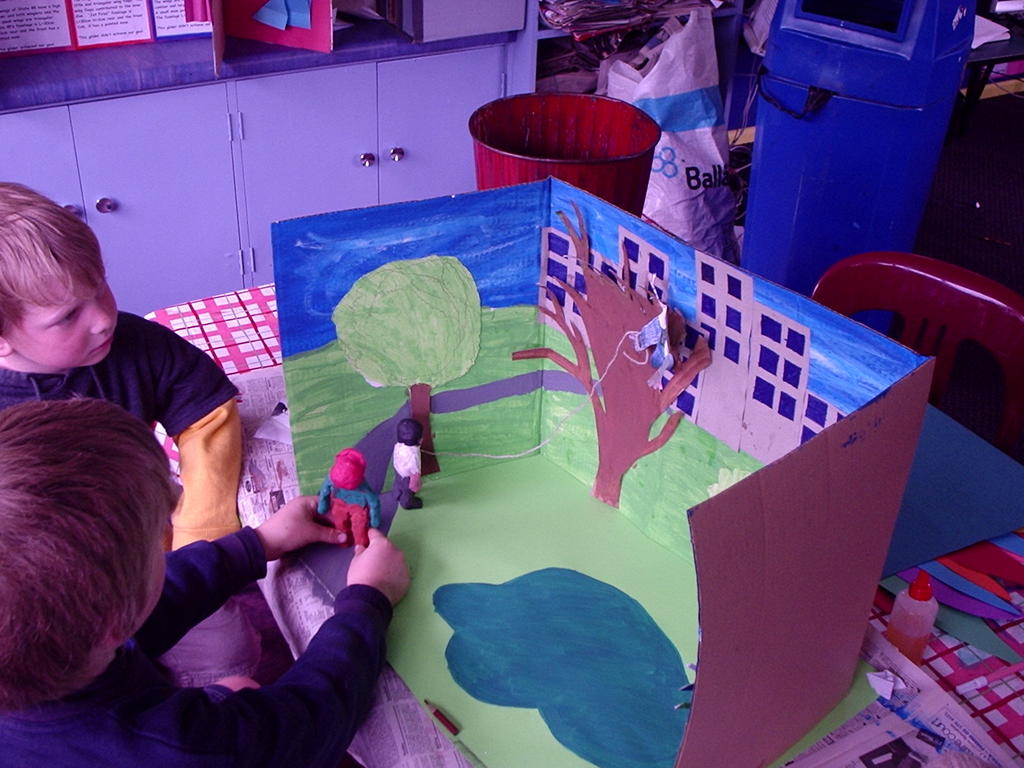
Kids at Tahora School have been Flat Out working on their Flat Stanley project. They have been reading Flat Stanley stories, taking Flat Stanley back to their farms for the holidays and taking lots of photos & telling Flat Stanley PowerPoint stories with them, they have been emailing buddies at an Auckland school and sharing their stories. Today they showed awesome creative, cooperative, and problem solving skills - along with a good measure of patience & persistence to create their Flat Stanley claymation. Here Flat Stanley becomes a kite and gets stuck in the tree!! Good on you guys. Today we fixed an rss feed on their blog so pop over and leave them a comment they'd love to hear from you.
Sunday, 9 October 2005
Podcasting
A lot of buzz about podcasting in recent conferences.
What is podcasting? Well it’s basically about subscribing and listening to audio feeds through the Internet. A bit like a ‘pick & mix’ of your own radio – when & where you want to listen to it. Portable mp3 players have really pushed this along - you can download to your laptop, your phone even & listen on the go. Also anyone can produce & broadcast their own shows (not that you’d want to listen to anything) – but it really makes it accessible for all (well those with the gear & the internet access but that’s another story) & it’s a democratizing media – we no longer have to be passive consumers of someone else’s stories or point of view but we get to shape the media ourselves. I won’t go too far down that track either but I’m sure you could write a thesis about it
Andy Carvin’s Waste of Bandwidth
Bit by Bit – Bob Sprankle
Bud the Teacher
Connect Learning with David Warlick
Ed Tech Coast to Coast
Paradigm Shift
Teach 42
(you can find these in the iTunes directory – they are all ‘edtech’ type podcasts)
What do you recommend??
Radio WillowWeb
Story Cast
Acclerated Reader Books
KPE (Point England NZ – Book reviews)
I have been searching high & low for ‘stories’ for Sophie – really there’s not a lot around …early days yet. Because this is a democratic media we actually have the ability to contribute to this & LibraVox are looking for readers to podcast ‘opensource’ books (including children’s books) Class project – maybe???
You can edit in audacity (freeware) or garageband on your mac.
Hosting your mp3 files podcasts is an area we need to investigate further – you don’t really want them on your own webhosted area – they will take up a bit of space and then there’s the bandwidth use as people access & download your files. There are a few recommendations and I guess you will look at them more closely when you have some podcasts ready to go…let us know!
The Education Podcast Network
Otherwise Google it – let us know if you find some good ones!
Leading in a Culture of Change
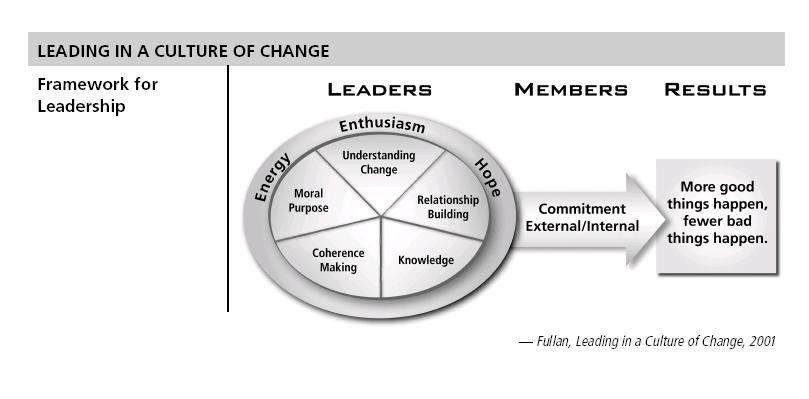 A must read from Michael Fullan
 Fullan presents a framework for leadership. With the complexity & relentless pace of change, leadership is key. Not the charismatic, superhuman leader which can result in episodic change but where we can all work together for sustainable change.
"...five components of leadership represent independent but mutual reinforcing forces for positive change....To be effective in complex times, leaders must be guided by moral purpose. Moral purpose means acting with the intention of making a positive difference.
Understand the change process: 1) the goal is not to innovate the most; 2) it is not enough to have the best ideas; 3) appreciate early difficulties of trying something new; 4) redefine resistance as a potential positive force; 5) reculturing is the name of the game; 6) never a checklist, always complexity...
The single factor common to every successful change initiative is that relationships improve. Thus leaders must be consummate relationship builders with diverse people and groups... effective leaders constantly foster purposeful interactions and problem solving, and are wary of easy consensus.
Knowledge creation and sharing ...leaders commit themselves to constantly generating and increasing knowledge inside and outside the organisation...turning information into knowledge is a social process. All this complexity keeps people on the edge of chaos. It is important to be on the edge because that is where creativity resides, but anarchy lurks there too. Therefore effective leaders tolerate enough ambiguity to keep the creative juices flowing, but along the way (once they and the group know enough), they seek coherence. Coherence making is a perennial pursuit."
Fullan also talks about personal characteristics that all effective leaders possess: energy - enthusiasm - hopefullness. He warns about groupthink "Leaders can be powerful, and so can groups, which means they can be powerfully wrong. This is why the five dimensions of leadership must work in concert. They provide a check against uninformed commitment."
Fullan advocates "...slow knowing, the importance of learning in context, and the need for leaders at all levels of the organisation, in order to achieve widespread internal commitment.'
Slow learning "slow learning doesn't have to take a long time. It is more of a disposition that can be 'acquired and practised'...they see the bigger picture; they don't panic when things go wrong in the early stages of a major change initiative. It is not so much that they take their time, but rather that they know that it takes time for things to gel. If they are attentive to the five leadership capacities... they know things are happening all the time, even when there is not closure. In a sense, they take as much time as the situation will allow, and do not rush to conclusions in order to appear decisive."
Learning in context "... is the learning with the greatest payoff because it is specific (customized to the situation) and because it is social (involves the group). Learning in context is developing leadership and improving the organization as you go."
Leadership for many "Internal commitment cannot be activated from the top. It must be nurtured up close in the dailiness of organisational behaviour, and for that to happen there must be many leaders around us...The ultimate leadership contribution is to develop leaders who can move the organization even further after you have left."
Saturday, 8 October 2005
From 64211732448, see below for replying to my Vodafone mobile
hows this just testing mobblog
For a limited time only you can send one free email reply straight to this Vodafone mobile! The reply can be up to 140 characters and will appear as a text message. You've got 14 days from the time of receiving the email to send a reply so don't miss out.
Vodafone is not responsible for the content of this email or your reply. Vodafone makes no representations in relation to the transmission of your reply.
Monday, 3 October 2005
Implementing ICT
Well I've been in study mode again - here are some of my thoughts on a question "Discuss your experiences of implementation of ICTs"
Implementation within our cluster has involved in the first place building relationships across our schools, Principals working together to develop a vision about the way they want their schools to work. I think this is what Julia Atkins calls ‘Educative Purpose’ – the WHY, Why are we doing this? Once you work out the why – which is based on our beliefs, then the what & the how will follow. Knowing the answers to our WHY questions maintains a focus and keeps us moving forward in the same direction. Principals & some ‘lead’ teachers went on a Bus Tour around other schools which had been held up to be showing examples of good practice. The discussions we had while & after visiting these schools and the workshops we have had since, has really helped them in forming a bigger picture of what we think is important in their schools. Principals are the ones who give license to our teachers to be innovative, creative and take risks; they provide the access to resources – improving infrastructure, finding money for extra PD release time; they communicate with the community about what is happening in our schools and so in effect ‘we are all dancing to the same tune’. Well that’s the rosy picture the reality of it in some schools is what is happening for the individual teacher in the classroom and what is the effect for our kids. We are asking questions now like “Why do I not see any changes in many of our classrooms?” “What are the benefits for our kids – does it improve learning outcomes, how do you measure it, should you measure it…?” At the end of the day its about making a difference in our classrooms – if all of our teachers have laptops, if the whole school is networked, if they have access to data display, mobile pods of computers, they have loads of PD opportunities, facilitator support in the classroom – then what, save a magic wand (by the way I do keep one of these in my office & try & use it from time to time but unfortunately it doesn’t work) what else do we need to do????
Do we keep working with our teachers but with a higher expectation that they will come on board? I know that in some of the
Sunday, 18 September 2005
ED Comes to Town!
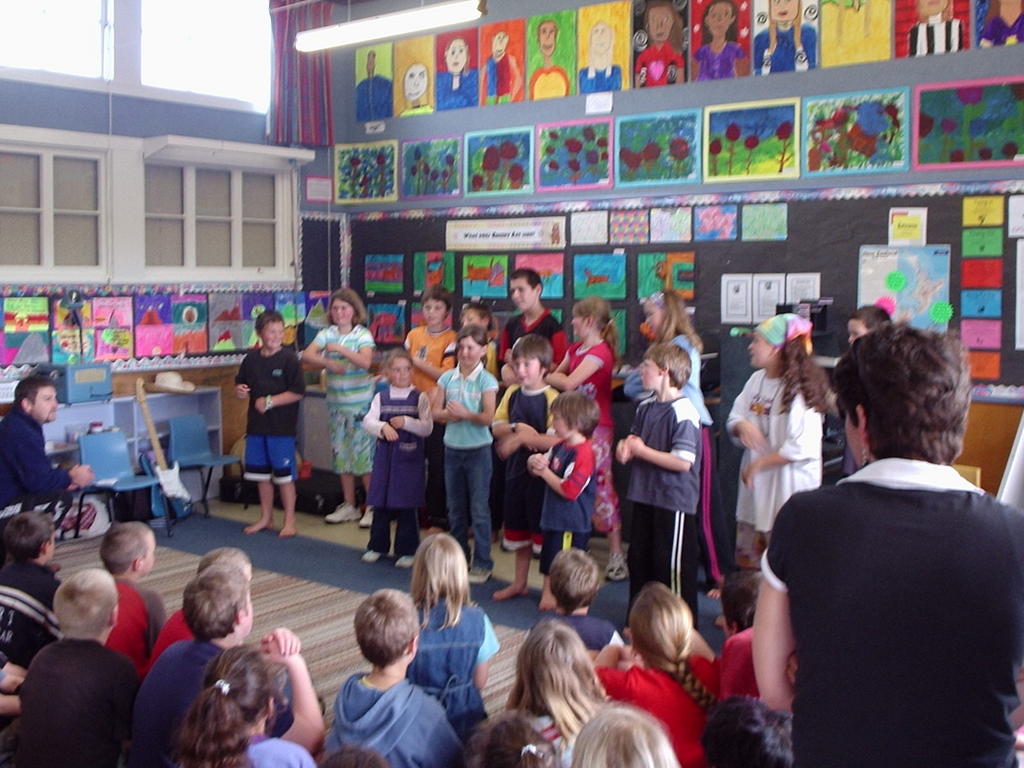
Don't miss the ED (combined schools of Douglas, Huiakama, Marco, Matau & Makahu) Production, 'Dancing Through the Ages', at the TET Kings Theatre, Stratford this Wednesday 21st September - entry gold coin donation. It will be a great show! Get down there & support our ED schools.
I was lucky enough to have a preview out at Huiakama last week - lots of energy & enthusiam :-) Some ICT integration too with the routing of the music playlist through the laptop, through the sound system & some to come with some visual images being worked on to add to the storyline - have to wait & see for that one. If we had the webcams up & running they could be learning their lines together too (but maybe next time).
McLuhan - the medium is the message
"At the speed of light, policies and political parties yield place to charismatic images."
Marshall McLuhan 1911-1980
This may be a very apt quote in the days to come after last nights events (deja vu)
But i don't want to focus on the politics - would like to know more about McLuhan - his name keeps popping up all over the place though he has been gone for quite some time. It seems he is an influential thinker in the area of Communication & was the one to coin the phrase 'the medium is the message' A whole host of his quotes some of them so well known can be found here. I am looking to read some of his work though wouldn't know what to start with - any suggestions would be appreciated. Maybe I'll just take a trip over to the Massey Library & order a selection :-)
Marshall McLuhan 1911-1980
This may be a very apt quote in the days to come after last nights events (deja vu)
But i don't want to focus on the politics - would like to know more about McLuhan - his name keeps popping up all over the place though he has been gone for quite some time. It seems he is an influential thinker in the area of Communication & was the one to coin the phrase 'the medium is the message' A whole host of his quotes some of them so well known can be found here. I am looking to read some of his work though wouldn't know what to start with - any suggestions would be appreciated. Maybe I'll just take a trip over to the Massey Library & order a selection :-)
Saturday, 17 September 2005
Education Prepares our Kids for the Present not just the Future
Just been listening to David Warlick's last podcast where he gives the soapbox to Dr Tim Tyson from Mabry Middle School who speaks passionately about the difference between schooling then (for us) & schooling now (or for some of us the potential). Warlick advises that for most listeners this is preaching to the converted but this is a message we should be taking out to our school communities. Tim is awesome to listen to though I think he focuses strongly on technology as an enabler when we know there are lots of other factors enabling our kids learning - but maybe that comes in podcast part 2... One of the main things that made me think about this podcast was when Tim talks about the huge untapped potential in our children as builders of knowledge. 'Knowledge is the seed for change and action.' That for some time we have thought of education as preparing our children for the future when really they have a lot to contribute in the present. I won't review this any further - it is really worth a listen to & not too long & not at all boring. Jump over to the Mabry website too - very slick but lots going on there too with their own Podcast Central.
And if you think i would spend this beautiful day sitting at my computer - you're wrong - (except for this 10 minutes to make my post) I have been busy around the garden with my new little toy in my pocket & my earphones on!!!!
And if you think i would spend this beautiful day sitting at my computer - you're wrong - (except for this 10 minutes to make my post) I have been busy around the garden with my new little toy in my pocket & my earphones on!!!!
Monday, 12 September 2005
Flickr Flickr
Just been listening to Steve @ Teach 42 podcasting about all the cool things you can do on Flickr. I started using Flickr out at Matau when we were working out how to get pictures on our blogs - way back then (say 3 months ago - long time at today's pace :-) it was the only way we could get photos up & make our blogs hopefully more interesting... Now of course you just click the little picture button on your blogspot webediting page & can put a photo up with a simple browse & click.
OK so Flickr - still using it for all my extra photos that don't make my blog page and also another account for sharing family photos. Steve's podcast opened up a whole lot of awesome ideas about how you can use Flickr. I don't need to repeat his ideas here - just go to his blog post Flickr-fy your life
Hey, here might be another workshop for Learning@School 90 minutes playing with Flickr - i know it can be done :-)
www.flickr.com
OK so Flickr - still using it for all my extra photos that don't make my blog page and also another account for sharing family photos. Steve's podcast opened up a whole lot of awesome ideas about how you can use Flickr. I don't need to repeat his ideas here - just go to his blog post Flickr-fy your life
Hey, here might be another workshop for Learning@School 90 minutes playing with Flickr - i know it can be done :-)
www.flickr.com
Monday, 5 September 2005
Builders’ Houses, Mechanics’ Cars, Teachers’ Children.
Just been to a Parent’s Evening @ the local highschool “Tips for Parents” from a company called ‘The Art of Learning.’ The pitch was developing accelerated learning techniques, hooking into our Emotional Intelligence & the senior students have been taking a series of workshops with this company. The blurb sounded a lot like Karen Boyes Spectrum Learning workshops so I thought I’d go for a nosey. A big focus on setting up our kids for success within the school system – studying, passing exams… Well, I know all that stuff of course but you know it’s the story of the builders’ house being the worst kept in the street. What do I do to encourage ‘school’ success in my children – do I turn off the TV, playstation, hound them to do their homework (even though they say they don’t have any). Well actually, none of the above. Why? Of course I want my kids to succeed but I feel in a sense I’m still bucking the system myself – do I value ‘school’ success? Only for the pathways it can lead you when you get good grades, pass exams, get accepted for scholarships, uni. courses, great careers. So somewhere along the line the intrinsic love of learning that I believe is innate in all of us turns into an external drive for success & who sets the benchmarks for this? & is this when some of our kids lose their motivation because they have to do things rather than want to?
It seems a bit contradictory to me that secondary schools need to bring in external facilitators to motivate our kids & introduce them to learning strategies. If the core business of our schools is learning then why are we not driving this within our schools – why is it an add-on & not an integrated part of our school cultures everyday and not just once a year around exam time? The no. 9 tip for parents was ‘develop a family learning culture’ – how do our schools develop learning cultures & extend this into our school whanau? Instead of helping our kids adapt to the existing system so they can taste success what are we doing to make our school system more adaptive to our kids learning needs? Any courses for our teachers to be reinforcing and supporting this with our kids within the classroom? Short answer – teachers are too busy for all that. Well, hello! What are teachers doing that they are so busy to help our children learn? Trying to cover curriculum content, coming to grips with NCEA, setting & marking ‘work’, trying to figure out how to turn their new laptops on & then use them to record grades on…
OK so what did I learn as a parent? I need to spend more time talking to my kids, taking an interest in their learning, encouraging them to extend their thinking, finding out what sparks their passions & talking, talking more talking. So worth going tonight just for that – I don’t do enough of it.
It seems a bit contradictory to me that secondary schools need to bring in external facilitators to motivate our kids & introduce them to learning strategies. If the core business of our schools is learning then why are we not driving this within our schools – why is it an add-on & not an integrated part of our school cultures everyday and not just once a year around exam time? The no. 9 tip for parents was ‘develop a family learning culture’ – how do our schools develop learning cultures & extend this into our school whanau? Instead of helping our kids adapt to the existing system so they can taste success what are we doing to make our school system more adaptive to our kids learning needs? Any courses for our teachers to be reinforcing and supporting this with our kids within the classroom? Short answer – teachers are too busy for all that. Well, hello! What are teachers doing that they are so busy to help our children learn? Trying to cover curriculum content, coming to grips with NCEA, setting & marking ‘work’, trying to figure out how to turn their new laptops on & then use them to record grades on…
OK so what did I learn as a parent? I need to spend more time talking to my kids, taking an interest in their learning, encouraging them to extend their thinking, finding out what sparks their passions & talking, talking more talking. So worth going tonight just for that – I don’t do enough of it.
Sunday, 4 September 2005
Mahoe High Flyers
Mahoe School may be gone but not forgotten.
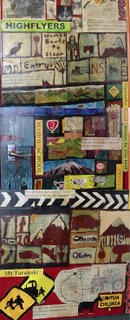
Need some images to brighten up this page - there has been too many words!!
Need some images to brighten up this page - there has been too many words!!
Teaching vs Learning
OK maybe i've been reading too much - but got to study - Assignment 3 not far away. (Groan)
Some ideas from Etienne Wenger "Communities of Practice: Learning, Meaning & Identity."
"A focus on teaching is not equivalent to a focus on learning. The two are not even mirror images. In an instructional context, such as a school classroom or a training session, the reification of learning (a focus on content) combined with institutional authority can easily create the impression that it is teaching that causes learning.... Instruction does not cause learning; it creates a context in which learning takes place, as do other contexts.
- Learning and teaching are not inherently linked. Much learning takes place without teaching, and indeed much teaching takes place without learning.
- To the extent that teaching and learning are linked in practice, the linkage is one not of cause and effect but of resources and negotiation
...Learning is an emergent ongoing process, which may use teaching as one of its many structuring resources"
Wenger contends that too much emphasis is put on pedagogical debate (eg transmission vs discovery learning) when at the heart of the matter is the ability of 'teaching' & 'learning' to interact around negotiated meaning and the structuring of resources for planned & emergent learning.
He discusses education as a tranformative process where the primary focus is on making meaning. He contends that students need places of engagement (activities with others, challenges & responsibilities, continuity to develop practices & commitment); materials and experiences with which to build an image of the world and themselves (developing our identity is important & can get lost in the institutionalised school); and ways of having an effect on the world and making their actions matter.
Phew - i think there's a quote below about an ounce of action being worth a ton of theory! I've been reading a ton of theory today... what can i do to take action??
Some ideas from Etienne Wenger "Communities of Practice: Learning, Meaning & Identity."
"A focus on teaching is not equivalent to a focus on learning. The two are not even mirror images. In an instructional context, such as a school classroom or a training session, the reification of learning (a focus on content) combined with institutional authority can easily create the impression that it is teaching that causes learning.... Instruction does not cause learning; it creates a context in which learning takes place, as do other contexts.
- Learning and teaching are not inherently linked. Much learning takes place without teaching, and indeed much teaching takes place without learning.
- To the extent that teaching and learning are linked in practice, the linkage is one not of cause and effect but of resources and negotiation
...Learning is an emergent ongoing process, which may use teaching as one of its many structuring resources"
Wenger contends that too much emphasis is put on pedagogical debate (eg transmission vs discovery learning) when at the heart of the matter is the ability of 'teaching' & 'learning' to interact around negotiated meaning and the structuring of resources for planned & emergent learning.
He discusses education as a tranformative process where the primary focus is on making meaning. He contends that students need places of engagement (activities with others, challenges & responsibilities, continuity to develop practices & commitment); materials and experiences with which to build an image of the world and themselves (developing our identity is important & can get lost in the institutionalised school); and ways of having an effect on the world and making their actions matter.
Phew - i think there's a quote below about an ounce of action being worth a ton of theory! I've been reading a ton of theory today... what can i do to take action??
Friday, 2 September 2005
SPS Shining the Light
Lighthouse or Navigator classrooms to show the way? What is a digital classroom? Well its not just the gear - but that helps shape the learning landscape. All teachers have their own laptops now, some will be putting their hands up to have fixed data display units in their rooms. This combined with access to a pod of wireless laptops. Show us what u can do!? :-) It's one thing for me to spend time modelling in classrooms - that is just a taste & very transient in the bigger scheme of things for the average classroom teacher. How often have I hoped to spark the flame, sometimes yes, but often no. The real multiplier effect will happen when teachers see it happening in each other's classrooms. Teachers often say 'If I could just see it in action'. Here may be the opportunity. Here may also be the threat - anything we do always has the potential to be a double edged sword. With Navigator classrooms there is the possibility of creating balkanism of the digital elite vs the resistors (though as Kelvin says we need the resistors to help us gain a balanced perspective). Jamie McKenzie (Learning @ School 2004) was very critical of the Navigator schools as being well resourced islands surrounded by a sea of schools who without. Julia Atkins countered this with her opinions that the Navigator Schools were influential in showing others the way (we know that from our own experience of Kim & Pat's visit there). So we need to focus on establishing good practise through resourcing, time to try things out & take risks, professional support, evaluation & reflection (some action research here?) and sharing it - again resourcing - support structures and time. Watch this space! :-)
Subscribe to:
Posts (Atom)